Temple, monastery or heritage site · 100 m
Ramgram Stupa
A grassy, unexcavated brick mound near Parasi, revered as a stupa holding a share of the Buddha's relics.
Chitwan & Teraiपरासी बजार
The headquarters town of Parasi district, a Terai market town and the base for Ramgram Stupa.
This is Parasi bazaar, the headquarters town of Parasi district in Lumbini Province.
Parasi is the administrative centre of Parasi district, the western half of the former Nawalparasi district, and lies within Ramgram Municipality on the flat Terai plain near the Indian border. It is a working market town rather than a tourist centre, with government offices, a busy bazaar, schools and bus connections to Bhairahawa and the East-West Highway.
For travellers its main interest is as the nearest base for Ramgram Stupa, the relic mound revered by Buddhists, which lies just outside the town. The surrounding countryside is a patchwork of rice, wheat and sugarcane fields, ponds and villages, and a stay here gives a plain, unvarnished view of daily life in the western Terai.
Facilities are modest: simple lodges, eateries serving dal bhat and Terai snacks, banks and shops. Many visitors pass through on a day trip from Bhairahawa or Lumbini rather than staying overnight.
Parasi grew as the headquarters of the old Nawalparasi district, which stretched from the Narayani river west towards Rupandehi. When Nepal's 2015 constitution reorganised the country into provinces, Nawalparasi was split along the Narayani-Susta area: the eastern part became Nawalparasi (East of Bardaghat-Susta) in Gandaki Province and the western part, with Parasi as its headquarters, joined Lumbini Province. The western district is now commonly called Parasi.
The name Ramgram, used for the municipality, recalls the ancient town of Ramagrama of the Koliya people mentioned in Buddhist texts. The local population mixes Tharu, Madhesi, Muslim and hill-origin communities, and Chhath, Holi, Dashain, Tihar and Eid are all celebrated in the town.
Ramgram Stupa
Visit the relic stupa on the edge of town, ideally early in the morning.
Bazaar walk
Walk the main market for local snacks, fabrics and fresh produce.
Village cycling
Hire or borrow a bicycle to explore the flat lanes and villages around the town in the cooler months.
Conditions change fast in the mountains.
Weather data: MET Norway, licensed CC BY 4.0. A forecast, not a guarantee.
Oct-Mar
A few simple hotels and lodges in the bazaar; Bhairahawa has more choice.
No partner stays are listed here yet. List a property.
Parasi is linked by road to Bhairahawa and to the East-West Highway; the nearest airport is at Bhairahawa.
Nearest hub: Bhairahawa
None needed
No permit is needed to visit Parasi.
Verify before travel: permit rules and fees change. Checked 2026-10-08 against Parasi District, Wikipedia.
What this place is typically exposed to, and when. These are seasonal patterns, not a report on conditions now.
Heatmoderate in a typical yearApr-Jun
April to June is hot on the Terai plains, often well above 35 C by midday; sightseeing is easiest early and late in the day.
Floodingmoderate in a typical yearJul-Sep
Monsoon rain can flood low fields and rural roads around Parasi between July and September.
Check current conditions before you travel
Roads, trails, passes and flights change with the weather and with roadworks, and nothing on this page describes conditions today. Before you set off, check the Department of Hydrology and Meteorology for weather and flood warnings, the Nepal Disaster Risk Reduction Portal for incidents, and the local authority, police or your licensed operator for road, trail and flight status.
Parasi is the headquarters of the western half of the former Nawalparasi district, which is now a separate district in Lumbini Province.
The main sight is Ramgram Stupa just outside town; otherwise it is a working Terai market town.
By road from Bhairahawa or from the East-West Highway; the nearest airport is at Bhairahawa.
Temple, monastery or heritage site · 100 m
A grassy, unexcavated brick mound near Parasi, revered as a stupa holding a share of the Buddha's relics.
Town or village
A growing highway town in Parasi on the East-West Highway, a stopping point between Narayangarh and Butwal.
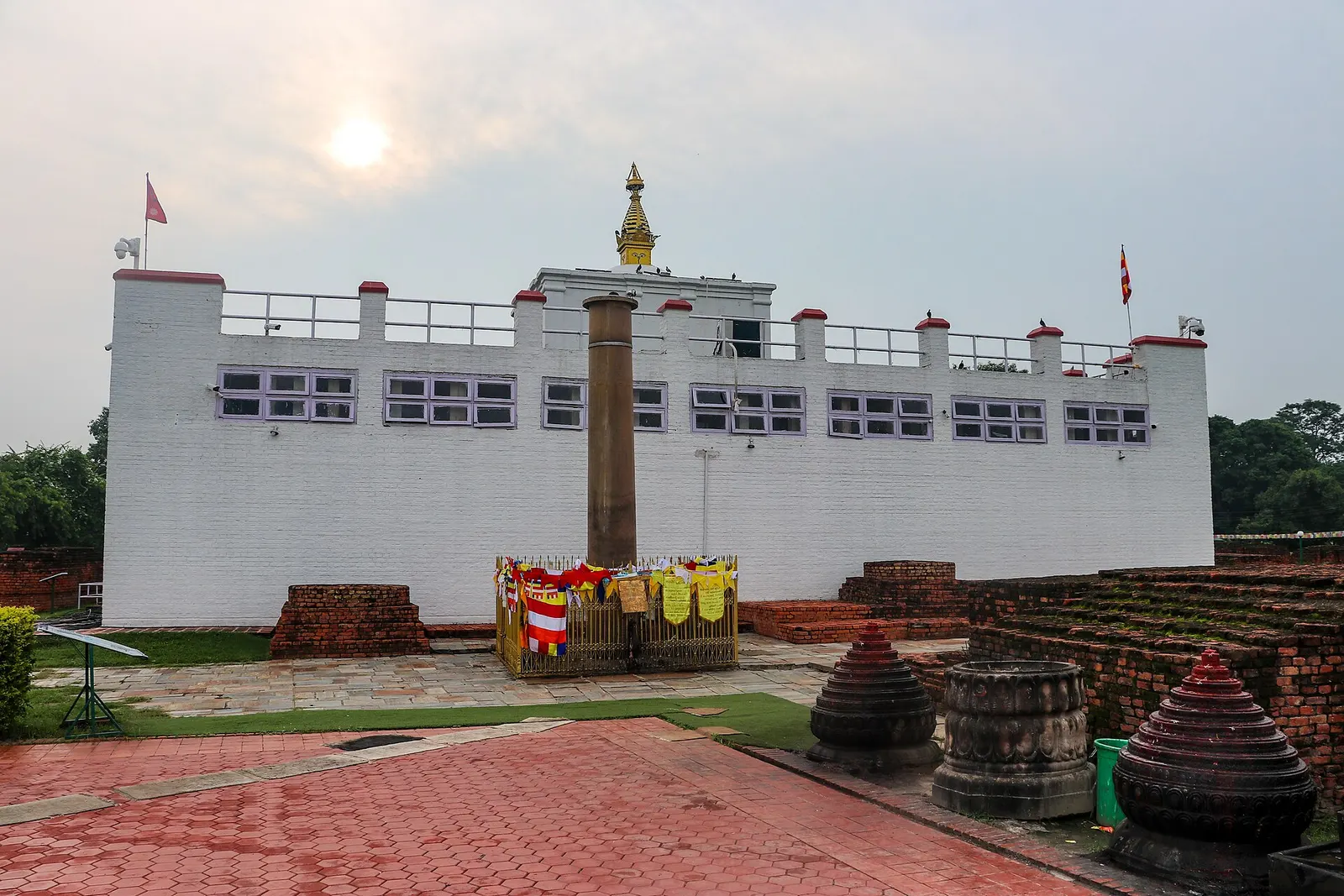
Temple, monastery or heritage site · 150 m
The birthplace of the Buddha in the Terai, a sacred garden with an Ashokan pillar, ringed by monasteries from across the Buddhist world.
Town or village
A busy city where the Terai meets the hills, at the mouth of the Tinau gorge and the start of the Siddhartha Highway.