Temple, monastery or heritage site
Tilaurakot
Ruins of an ancient walled city identified with Kapilavastu, where tradition says Siddhartha grew up.
Chitwan & Teraiगोटीहवा
The stump of an Ashoka pillar and a brick stupa, linked by tradition with the Buddha Krakuchanda.
Higher seasonal exposure: heat (Apr-Jun).
Gotihawa is a small village and archaeological site in Kapilvastu district, south-west of Taulihawa, where the lower part of a broken Ashokan pillar stands beside the remains of a large brick stupa. Buddhist tradition associates the place with Krakuchanda, one of the Buddhas believed to have come before Gautama, and the site is often described as his birthplace or place of final passing.
The pillar stump carries no surviving inscription, so the identification rests on tradition and the accounts of Chinese pilgrims who described monuments to the earlier Buddhas in this region. Even so, Gotihawa forms an important stop on the pilgrimage circuit around ancient Kapilavastu.
Like the other sites around Taulihawa, Gotihawa is quiet and rural, with few facilities and wide views over the plains. It is best visited as part of a day circuit from Lumbini that also takes in Tilaurakot and Niglihawa, ideally early in the day before the heat builds.
The Mauryan emperor Ashoka is believed to have honoured the sites of earlier Buddhas around Kapilavastu with stupas and pillars in the third century BCE. At Gotihawa only the base of the pillar remains, set in the ground beside the stupa mound.
Excavations have exposed parts of the brick stupa and recovered pottery and other objects. The village around the site is home to Madhesi and Tharu families, and the monument sits among farmland that has been cultivated for centuries. Visitors should remember that the site remains a place of devotion for Buddhist pilgrims, who sometimes leave flowers, lamps or prayer flags at the stupa, and should behave accordingly.
See the pillar and stupa
Walk around the stupa mound and the pillar base.
Pilgrimage circuit
Combine with Tilaurakot and Niglihawa on a day trip from Lumbini.
Village walk
Stroll through the surrounding village and farmland to see rural Terai life.
Conditions change fast in the mountains.
Weather data: MET Norway, licensed CC BY 4.0. A forecast, not a guarantee.
Oct-Mar
Stay in Lumbini, Bhairahawa or Taulihawa.
No partner stays are listed here yet. List a property.
Drive west from Lumbini to Taulihawa, then a short distance onward to Gotihawa.
Nearest hub: Lumbini
None needed
No permit is needed.
Verify before travel: permit rules and fees change. Checked 2026-10-08 against Gotihawa, Wikipedia.
What this place is typically exposed to, and when. These are seasonal patterns, not a report on conditions now.
Heathigh in a typical yearApr-Jun
The open plain is very hot from April to June, and there is little shade at the site.
Floodingmoderate in a typical yearJul-Sep
Local roads can be muddy or flooded during the monsoon.
Check current conditions before you travel
Roads, trails, passes and flights change with the weather and with roadworks, and nothing on this page describes conditions today. Before you set off, check the Department of Hydrology and Meteorology for weather and flood warnings, the Nepal Disaster Risk Reduction Portal for incidents, and the local authority, police or your licensed operator for road, trail and flight status.
The base of a broken Ashokan pillar and the remains of a brick stupa.
Buddhist tradition associates it with Krakuchanda, one of the Buddhas said to have preceded Gautama.
By road from Lumbini via Taulihawa, usually on a day trip with Tilaurakot and Niglihawa.
Temple, monastery or heritage site
Ruins of an ancient walled city identified with Kapilavastu, where tradition says Siddhartha grew up.
Temple, monastery or heritage site
A broken Ashoka pillar beside an old pond, linked by its inscription with the Buddha Konagamana.
Temple, monastery or heritage site · 150 m
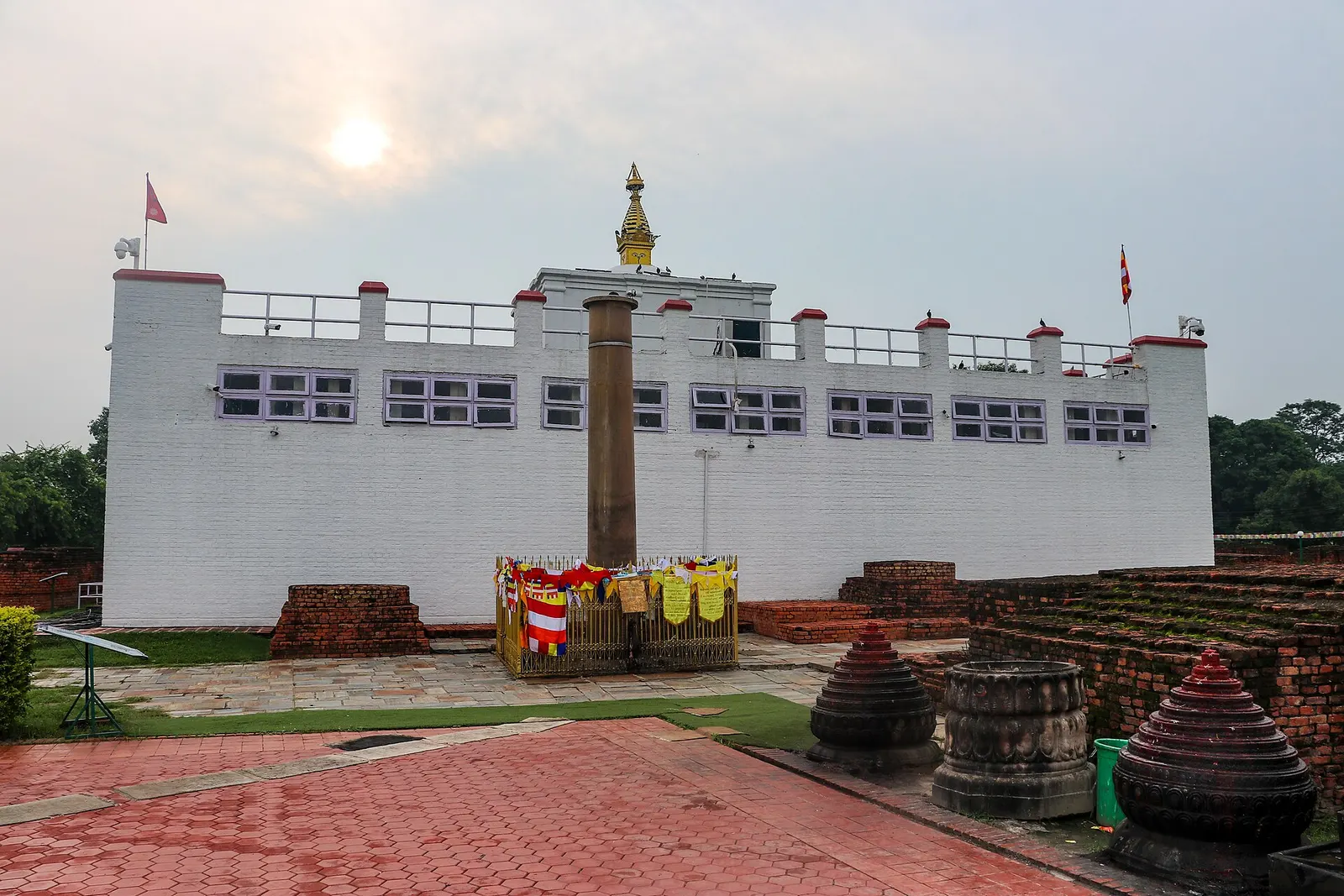
The birthplace of the Buddha in the Terai, a sacred garden with an Ashokan pillar, ringed by monasteries from across the Buddhist world.